
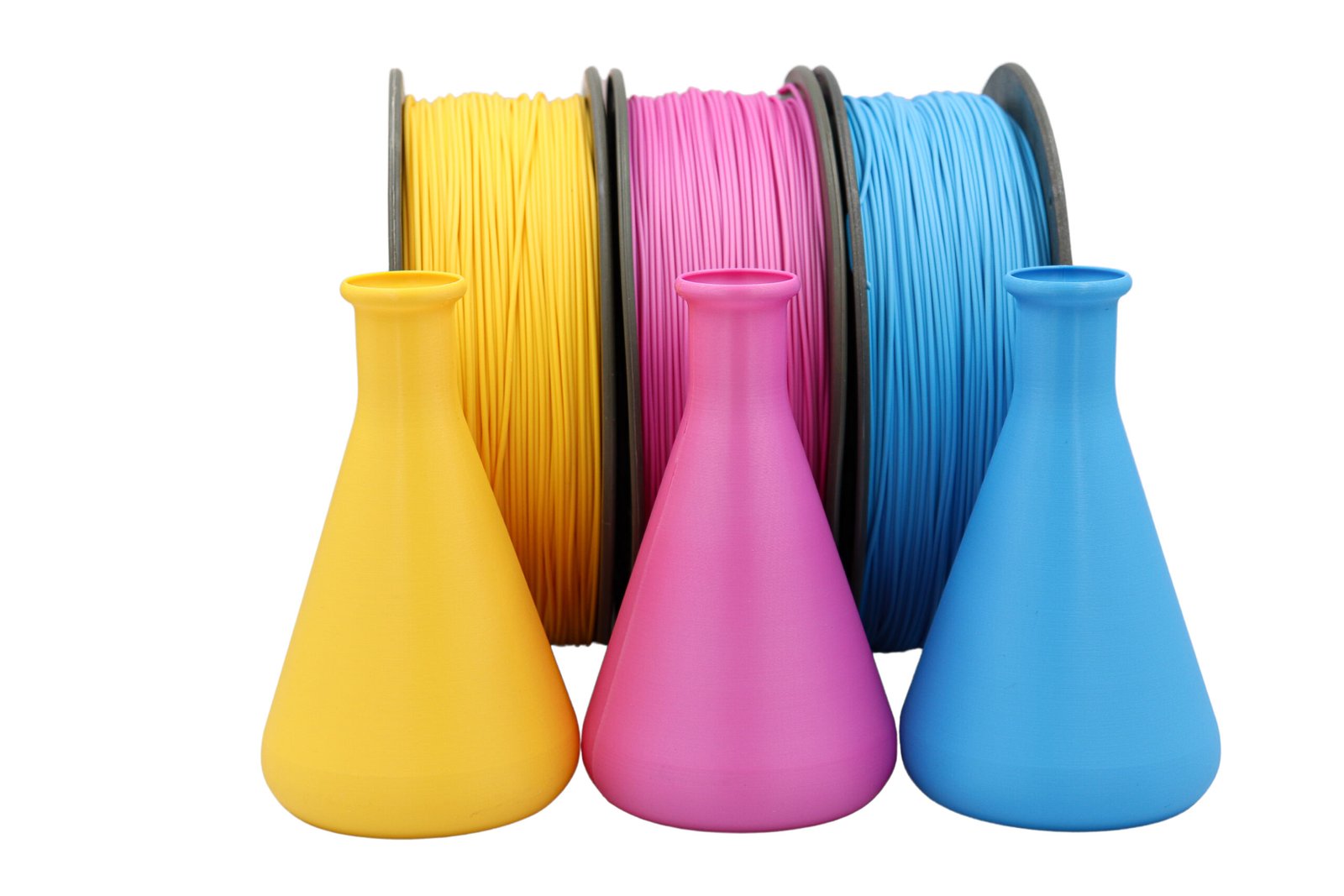
Choosing the right filament in 2026 is no longer just about printability — it’s about how your parts behave in the real world. As 3D printing moves deeper into functional, end-use, and small-batch manufacturing, the debate around PLA vs PETG vs ASA has become more relevant than ever. Each material has matured, each has its strengths, and each can be the “wrong” choice if used in the wrong environment. This guide breaks down PLA vs PETG vs ASA from a real-world perspective so you can confidently choose the right filament for your parts.
Understanding the Core Differences Between PLA, PETG, and ASA
At a high level, PLA vs PETG vs ASA represents three very different philosophies in filament design. PLA prioritizes ease of use and surface quality, PETG balances strength and flexibility, and ASA focuses on durability in demanding environments. Understanding these differences upfront saves time, material, and frustration.
PLA: Easy Printing, Limited Real-World Performance
What Makes PLA Popular
PLA remains the most widely used filament in the PLA vs PETG vs ASA comparison. It prints easily, adheres well to most build plates, and produces clean surface finishes even on entry-level machines. For prototyping, visual models, and rapid iteration, PLA is still hard to beat.
Mechanical and Thermal Reality of PLA
Despite its popularity, PLA has clear limitations. It is relatively brittle and has poor heat resistance. In real-world conditions, PLA parts can deform inside a parked car, near motors, or under prolonged mechanical stress. When evaluating PLA vs PETG vs ASA, PLA consistently ranks lowest for functional durability.
Where PLA Still Makes Sense
PLA excels in decorative prints, indoor parts, concept validation models, and low-stress jigs or fixtures. For these applications, PLA vs PETG vs ASA doesn’t need to be a hard choice — PLA is often enough.
PETG: The Practical Middle Ground
Why PETG Is So Widely Used
In the PLA vs PETG vs ASA debate, PETG often emerges as the most versatile option. It combines easier printing than ASA with significantly better durability than PLA. PETG is less brittle, more impact-resistant, and handles moderate heat far better than PLA.
Real-World Strength and Flexibility
PETG shines in functional parts that need to survive light outdoor use, mechanical stress, or occasional heat exposure. Compared to PLA, PETG bends before breaking, which makes it ideal for clips, enclosures, mounts, and housings. In PLA vs PETG vs ASA, PETG offers the best balance for most users.
PETG Limitations to Consider
PETG isn’t perfect. It can be prone to stringing, absorbs moisture more readily than PLA, and can scratch more easily. Still, when choosing between PLA vs PETG vs ASA, PETG is often the safest all-around option for real-world parts.
Best PETG Applications
PETG works especially well for functional brackets, mechanical housings, containers, organizers, and parts exposed to mild outdoor conditions.
ASA: Built for Harsh Environments
Why ASA Exists
ASA was developed specifically to overcome the weaknesses of PLA and PETG in demanding environments. In the PLA vs PETG vs ASA comparison, ASA is the clear winner for outdoor durability, UV resistance, and heat tolerance.
Mechanical and Environmental Performance
ASA handles high temperatures, sunlight, and long-term outdoor exposure far better than PLA or PETG. Parts made from ASA maintain dimensional stability, color, and strength even after months outside. This makes ASA the professional-grade choice in PLA vs PETG vs ASA.
Printing Challenges with ASA
ASA requires higher print temperatures, a heated bed, and ideally an enclosed printer. Warping and fumes are real considerations. This is where PLA vs PETG vs ASA becomes a question of capability — ASA rewards preparation but punishes shortcuts.
Ideal ASA Use Cases
ASA is ideal for outdoor fixtures, automotive components, weather-exposed enclosures, and industrial or engineering-focused parts.
Side-by-Side Comparison: PLA vs PETG vs ASA
When comparing PLA vs PETG vs ASA, several factors consistently matter most. PLA is the easiest to print, PETG sits in the middle, and ASA is the most demanding. ASA offers the highest heat resistance and outdoor durability, PETG provides excellent impact strength, and PLA delivers the best surface finish. These differences highlight why PLA vs PETG vs ASA is not about picking the “best” filament, but the right one.
How to Choose the Right Filament in 2026
The smartest way to approach PLA vs PETG vs ASA is to start with the environment your part will live in. If the part stays indoors and is mostly visual, PLA is sufficient. If it must survive daily use and moderate stress, PETG is usually ideal. If it faces sunlight, heat, or weather exposure, ASA is the correct choice in the PLA vs PETG vs ASA discussion.
Real-World Scenarios and Practical Recommendations
For rapid prototyping, PLA vs PETG vs ASA leans strongly toward PLA. For functional home and workshop parts, PETG often wins. For professional or outdoor applications, ASA justifies its higher printing requirements. Many experienced users keep all three materials on hand and select based on the job rather than loyalty to a single filament.
Final Thoughts
The PLA vs PETG vs ASA debate will continue as materials evolve, but the fundamentals remain the same. PLA offers speed and simplicity, PETG delivers balance, and ASA provides long-term durability. When you match the filament to the real-world demands of your part, your prints don’t just look good — they last.