
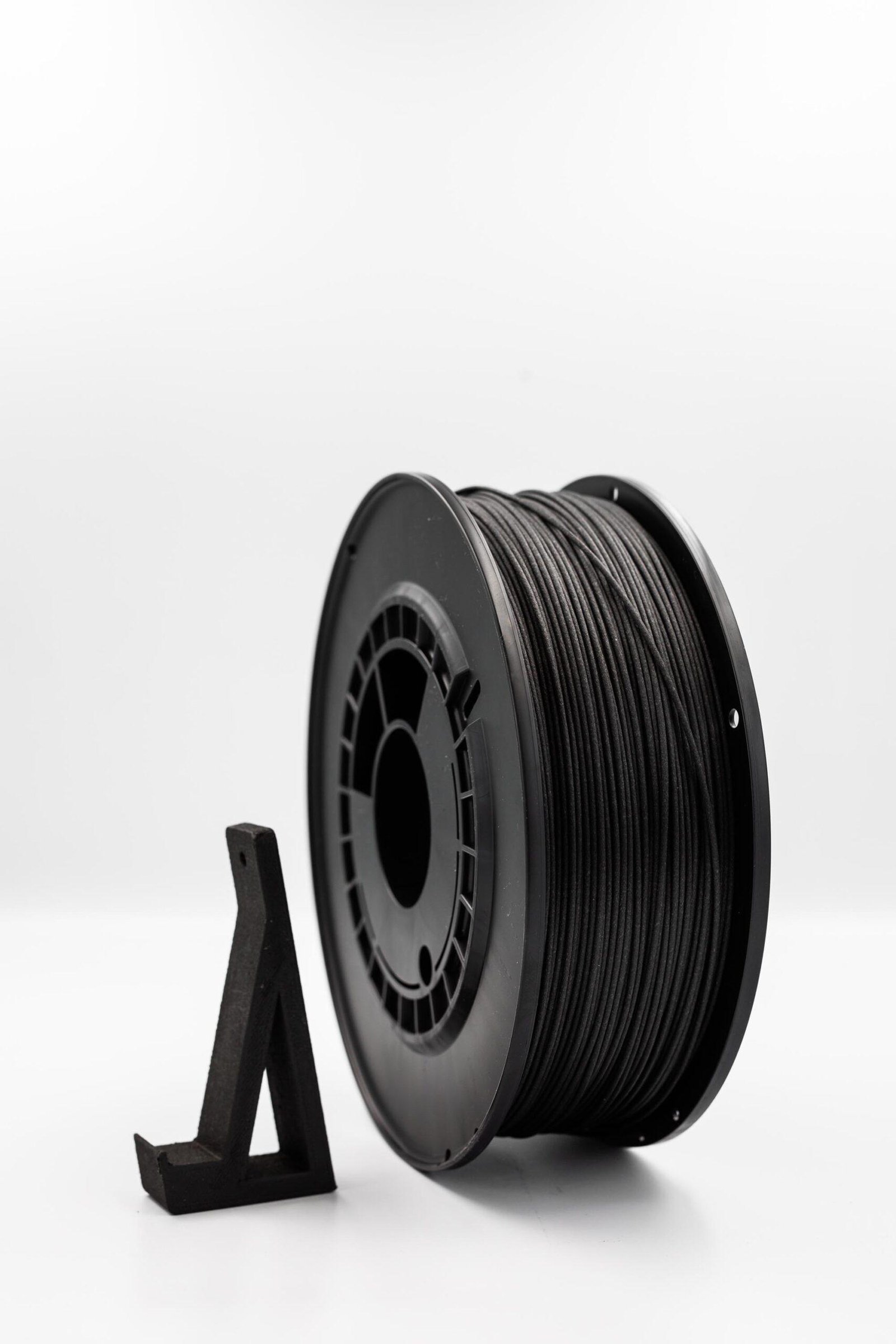
As industrial 3D printing moves beyond prototyping and into real-world production, material choice has become just as important as printer capability. Engineers, manufacturers, and advanced makers increasingly demand filaments that deliver strength, dimensional stability, heat resistance, and low weight all at once. This is exactly where PA12-CF15 carbon fiber nylon stands out. Across industries, PA12-CF15 use cases continue to expand, particularly in drones, automotive components, and mechanical brackets where performance cannot be compromised.
Unlike standard nylons or commodity filaments, PA12-CF15 applications focus on functional parts that experience continuous mechanical stress, vibration, and temperature variation. Reinforced with 15 percent chopped carbon fiber, this material bridges the gap between plastic and metal, making it a go-to solution for demanding engineering environments.
What Is PA12-CF15 and Why It Matters in High-Performance 3D Printing
PA12-CF15 is a polyamide 12 base material reinforced with carbon fiber, designed specifically for high-strength, low-weight applications. The PA12 base offers excellent chemical resistance, low moisture absorption, and dimensional stability, while carbon fiber reinforcement dramatically improves stiffness and load-bearing capacity.
In professional manufacturing environments, PA12-CF15 carbon fiber nylon is valued for its predictable behavior under stress. Unlike softer nylons that deform over time, PA12-CF15 maintains shape and rigidity even in long-term mechanical use. This reliability is why PA12-CF15 use cases frequently replace machined aluminum or steel parts when weight reduction and production speed are priorities.
Key Material Properties That Make PA12-CF15 Stand Out
Carbon Fiber Reinforcement and Its Structural Benefits
The defining feature of PA12-CF15 carbon fiber nylon is its 15 percent carbon fiber content. These fibers reinforce the polymer matrix, increasing stiffness and tensile strength while reducing flex. This property is critical in PA12-CF15 applications where parts must resist bending, torsion, or vibration over extended periods.
Carbon fiber also improves layer-to-layer bonding consistency, making printed parts more uniform and reliable when compared to unfilled nylons.
Strength-to-Weight Ratio for Load-Bearing Parts
One of the most compelling PA12-CF15 use cases is its ability to replace metal components without sacrificing structural integrity. Parts printed with PA12-CF15 can weigh significantly less than aluminum equivalents while delivering comparable rigidity for many applications. This makes it especially valuable in drones and automotive systems where weight reduction directly improves performance.
Thermal Stability and Heat Resistance
PA12-CF15 performs well in elevated temperatures, maintaining mechanical properties in environments where PLA, PETG, or even ABS would soften or deform. For PA12-CF15 applications involving engine bays, electronics housings, or industrial machinery, this thermal stability is a major advantage.
Dimensional Accuracy and Low Warping Behavior
Thanks to the PA12 base polymer, PA12-CF15 carbon fiber nylon exhibits low shrinkage and reduced warping during printing. This results in tight tolerances and consistent dimensions, which is essential for mechanical brackets, fixtures, and assemblies that must fit precisely without post-adjustment.
Why PA12-CF15 Is Ideal for Drone Applications
Lightweight Structural Frames and Arms
In drone manufacturing, every gram matters. PA12-CF15 use cases in drones often include frame components, arms, and structural reinforcements where stiffness is essential but weight must be minimized. Carbon fiber reinforcement allows these parts to remain rigid during flight while reducing overall mass.
This balance of lightness and strength is difficult to achieve with traditional plastics, making PA12-CF15 applications particularly valuable for performance-oriented drones.
Motor Mounts and Vibration-Resistant Components
Motors generate continuous vibration that can quickly degrade weaker materials. PA12-CF15 carbon fiber nylon excels in vibration resistance, making it ideal for motor mounts, camera brackets, and sensor housings. The material absorbs and distributes stress evenly, reducing fatigue and extending part lifespan.
Aerodynamic Housings and Protective Covers
Custom housings for flight controllers, GPS units, and power systems are another common area for PA12-CF15 use cases. The material’s dimensional stability ensures that enclosures maintain shape under thermal and mechanical stress, protecting sensitive electronics during extended operation.
PA12-CF15 Use Cases in the Automotive Industry
Functional Prototypes for Fit and Stress Testing
Automotive engineers rely heavily on PA12-CF15 applications for functional prototyping. Unlike basic prototypes made from PLA or ABS, PA12-CF15 parts can be tested under realistic mechanical loads, providing accurate feedback before moving to full production.
This allows manufacturers to validate designs faster while reducing development costs.
Under-the-Hood Components Exposed to Heat
Engine bays expose components to continuous heat, vibration, and chemical exposure. PA12-CF15 carbon fiber nylon handles these conditions far better than standard filaments, making it suitable for brackets, cable guides, and mounting components under the hood.
These PA12-CF15 use cases help automotive manufacturers replace metal parts where possible, reducing weight without compromising durability.
Interior and Exterior Structural Brackets
From dashboard supports to exterior mounting systems, PA12-CF15 applications in automotive interiors and exteriors are growing rapidly. The material provides the rigidity needed for structural support while maintaining a clean surface finish suitable for visible components.
Custom Jigs, Fixtures, and Assembly Aids
Manufacturing efficiency depends on precise tooling. PA12-CF15 use cases include custom jigs, fixtures, and alignment tools that must withstand repeated mechanical stress. The material’s stiffness and wear resistance make it ideal for these production aids.
Mechanical Brackets: Where PA12-CF15 Excels
Load-Bearing Mounts and Structural Supports
Mechanical brackets are one of the most common PA12-CF15 applications. Whether used in industrial equipment or custom machinery, these parts must support weight without deformation. PA12-CF15 carbon fiber nylon delivers the rigidity needed for load-bearing brackets that remain stable over time.
Industrial and Manufacturing Equipment Brackets
In industrial environments, brackets are exposed to continuous vibration and mechanical load cycles. PA12-CF15 use cases include mounting systems for motors, conveyors, sensors, and control panels where reliability is essential.
Replacement Parts for Metal Bracket Alternatives
Many manufacturers turn to PA12-CF15 applications when metal brackets are overengineered or expensive. In low to medium load scenarios, PA12-CF15 offers sufficient strength while simplifying production and reducing costs.
PA12-CF15 vs Other Engineering Filaments
PA12-CF15 vs Standard Nylon Filaments
Compared to unfilled nylons, PA12-CF15 carbon fiber nylon provides significantly higher stiffness and dimensional stability. While standard nylon may flex under load, PA12-CF15 maintains shape, making it better suited for structural PA12-CF15 use cases.
PA12-CF15 vs Glass-Filled Nylons
Glass-filled nylons improve strength but often increase brittleness. PA12-CF15 applications benefit from carbon fiber reinforcement, which provides stiffness without excessive fragility, resulting in more balanced mechanical performance.
When PA12-CF15 Is a Better Choice Than Metal
While metal remains necessary for extreme loads, many PA12-CF15 use cases successfully replace aluminum components. The ability to print complex geometries, reduce weight, and shorten lead times makes PA12-CF15 a strong alternative in many scenarios.
Design and Printing Considerations for PA12-CF15 Parts
Best Printer Requirements and Hardware Setup
To achieve optimal results with PA12-CF15 carbon fiber nylon, a hardened nozzle is essential due to the abrasive nature of carbon fiber. Enclosed printers with controlled temperatures further improve print quality and layer adhesion.
Optimal Layer Orientation for Strength
Layer orientation significantly affects strength in PA12-CF15 applications. Designers should align layers with expected load directions whenever possible to maximize mechanical performance and durability.
Tolerances, Wall Thickness, and Infill Recommendations
For structural PA12-CF15 use cases, thicker walls and moderate to high infill percentages provide the best balance of strength and material efficiency. The material’s low warping behavior allows for tight tolerances when properly calibrated.
Post-Processing and Surface Finishing Options
Support Removal and Edge Cleanup
PA12-CF15 parts are easy to post-process using standard tools. Light sanding or trimming removes supports cleanly without compromising structural integrity, making it suitable for professional PA12-CF15 applications.
Machining, Drilling, and Tapping PA12-CF15 Parts
One advantage of PA12-CF15 carbon fiber nylon is its machinability. Parts can be drilled, tapped, or milled with precision, allowing for threaded inserts and fasteners in mechanical assemblies.
Cost, Performance, and Long-Term Value
Material Cost vs Functional Performance
While PA12-CF15 costs more than basic filaments, its performance justifies the investment in demanding PA12-CF15 use cases. Reduced part failure, longer service life, and faster production cycles deliver strong long-term value.
Durability in Real-World Applications
From drones to automotive tooling, PA12-CF15 applications consistently demonstrate durability under real-world conditions. This reliability makes it a trusted choice for engineers who need predictable results.
When PA12-CF15 Is the Right Material Choice
Ideal Use Cases Recap
PA12-CF15 excels in applications requiring strength, rigidity, thermal stability, and low weight. Drones, automotive components, and mechanical brackets represent some of the most effective PA12-CF15 use cases in modern manufacturing.
Situations Where Another Material May Be Better
For ultra-high temperatures or extreme impact resistance, alternative materials may be required. However, for the majority of structural and functional components, PA12-CF15 carbon fiber nylon remains one of the most versatile and reliable options available today.