
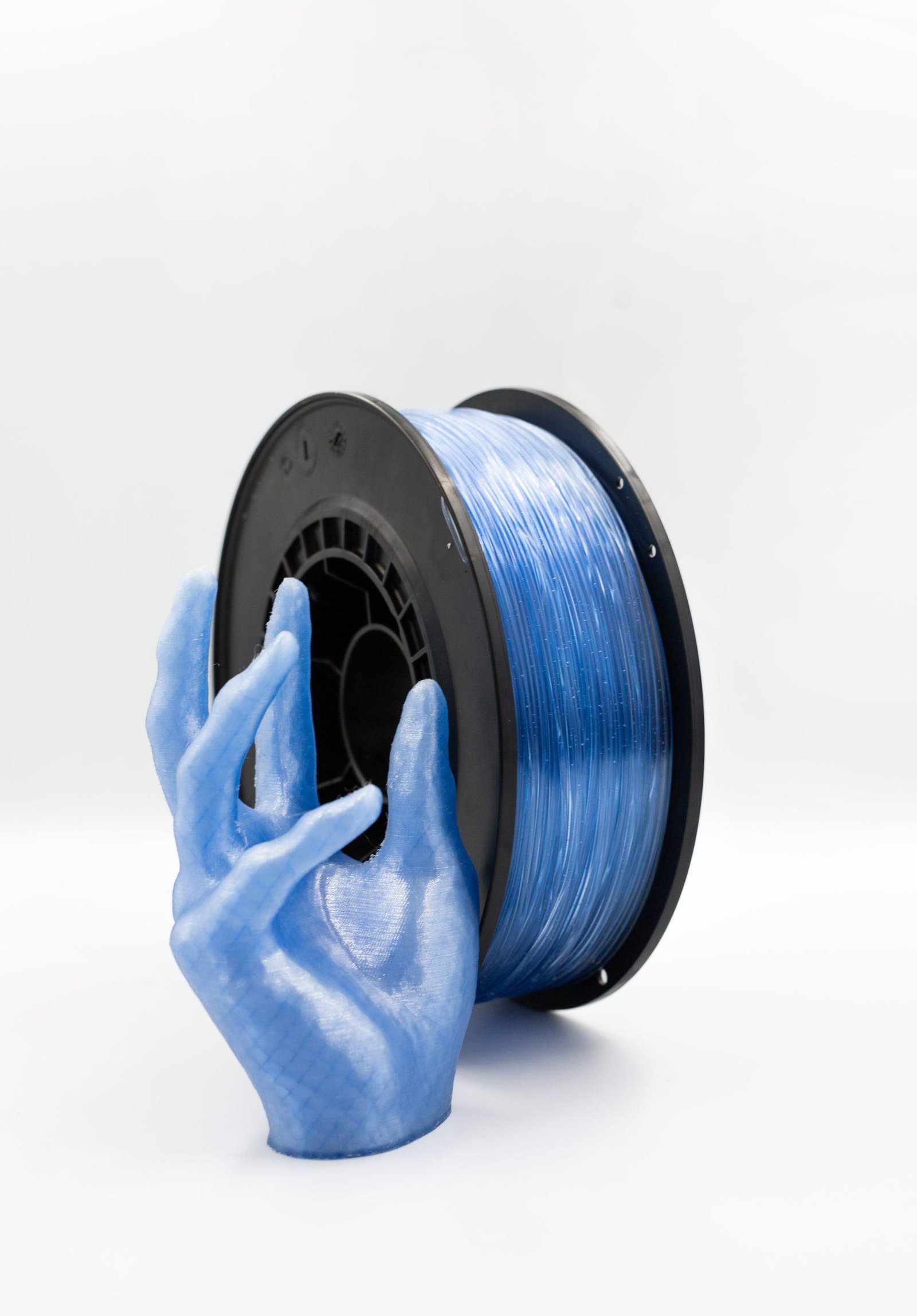
Recycled filaments often get labeled as weaker, less reliable, or overly fragile compared to their virgin counterparts. Among 3D printing communities, recycled filament brittleness is one of the most repeated concerns, frequently discouraging makers from choosing sustainable materials. But does this perception match real-world results, or is it a myth rooted in early manufacturing limitations? By looking closely at material science, testing data, and real printing conditions, it becomes clear that recycled materials deserve a far more balanced evaluation.
Understanding the Brittleness Myth in Recycled Filaments
The assumption that recycled filament brittleness is inevitable usually comes from misunderstandings about polymer reuse. Many users associate recycling with degradation, assuming that every reprocessing cycle dramatically weakens the material. In reality, modern recycling methods are far more controlled, producing consistent filament with predictable mechanical behavior.
Why Brittleness Became a Common Assumption in 3D Printing
Early recycled filaments were often made with limited filtration and inconsistent extrusion control. This led to irregular diameters, moisture contamination, and weaker layer bonding. These early issues shaped the belief that recycled 3D printer filament performance could never match virgin material. Today, however, improved sorting, drying, and extrusion technology has changed that landscape.
How Brittleness Is Measured in 3D Printing Materials
Brittleness is not a vague feeling during handling. It is measured through impact resistance, elongation at break, and flexural strength. When tested properly, many recycled filaments fall well within acceptable ranges for functional prints, challenging long-standing assumptions about recycled filament brittleness.
What Recycled Filaments Are Made Of
Differences Between Virgin and Recycled Polymers
Virgin filament is produced from newly synthesized polymer chains, while recycled filament is created from reclaimed industrial waste or post-consumer plastics. The key factor is not the source but the consistency of the polymer chains after processing. When controlled correctly, recycled filament vs virgin filament strength differences can be minimal.
How Recycled PLA, PETG, and ABS Are Processed
High-quality recycled filaments undergo shredding, washing, drying, and melt filtration before extrusion. These steps remove contaminants and stabilize melt flow. As a result, recycled 3D printer filament performance in PLA, PETG, and ABS can rival that of virgin material for many applications.
The Role of Additives and Stabilizers in Recycled Filaments
Manufacturers often add stabilizers to recycled filament to compensate for thermal history. These additives improve layer adhesion and impact resistance, directly addressing recycled filament brittleness concerns and ensuring consistent printing behavior.
Material Science Behind Recycled Filament Performance
Polymer Chain Degradation Explained Simply
Each time plastic is melted, polymer chains can shorten slightly. However, controlled recycling limits this degradation. Proper temperature management and filtration ensure that recycled filament retains sufficient molecular weight for strength and flexibility.
Melt Flow Index and Its Impact on Strength
Melt flow index plays a critical role in print quality. Recycled filament with a well-controlled melt flow index prints smoothly and bonds layers effectively. Poor melt flow, not recycling itself, is often the real cause behind perceived recycled filament brittleness.
Moisture Sensitivity and Brittleness Factors
Moisture absorption affects both virgin and recycled materials. Improperly dried filament becomes brittle regardless of origin. Many reports of weak recycled prints stem from storage issues rather than intrinsic material flaws, misleading users about recycled 3D printer filament performance.
Are Recycled Filaments Actually More Brittle?
Lab Testing Results vs Real-World Prints
Independent testing frequently shows that recycled filament vs virgin filament strength differences fall within small margins. In real-world prints, geometry, infill, and print settings often matter far more than whether the filament is recycled or virgin.
Impact Strength and Flexibility Compared to Virgin Filament
When comparing impact resistance, well-manufactured recycled filaments often perform similarly to virgin versions. In some cases, recycled PETG even demonstrates improved flexibility, further weakening the recycled filament brittleness argument.
When Recycled Filaments Perform Equally or Better
For non-critical structural parts, enclosures, brackets, and housings, recycled 3D printer filament performance is more than sufficient. These materials consistently handle mechanical stress when printed correctly.
Print Settings That Influence Brittleness More Than Material Source
Temperature Control and Layer Adhesion
Printing too cold reduces layer fusion, increasing brittleness in any filament. Optimized nozzle temperatures significantly improve recycled filament strength and reduce breakage.
Cooling, Fan Speed, and Stress Concentration
Excessive cooling creates internal stress. Dialing back fan speed often improves toughness more than switching from recycled to virgin filament, again highlighting how recycled filament brittleness is often a process issue.
Infill Patterns and Wall Thickness Choices
Thin walls and low infill amplify stress points. Increasing wall count and choosing stress-distributing infill patterns dramatically improves part durability, regardless of filament origin.
Common Mistakes That Make Recycled Filaments Seem Brittle
Poor Storage and Moisture Absorption
Leaving filament exposed to humidity is one of the fastest ways to degrade performance. Many negative impressions of recycled filament brittleness originate from moisture-damaged spools rather than inferior material.
Using Incorrect Nozzle or Extrusion Settings
Inconsistent extrusion leads to weak layer bonding. Calibrating flow rate and extrusion width is essential for achieving optimal recycled 3D printer filament performance.
Mixing Recycled and Virgin Filaments Improperly
Switching between materials without adjusting settings can create misleading comparisons. Each filament requires tuning, whether recycled or virgin.
Best Use Cases for Recycled Filaments
Functional Parts vs Prototyping Applications
Recycled filament works exceptionally well for prototyping, jigs, fixtures, and low-load mechanical components. In many cases, recycled filament vs virgin filament strength differences are irrelevant for these uses.
Recycled Filaments for Everyday Mechanical Prints
Tool holders, cable guides, brackets, and enclosures are ideal applications. These prints demonstrate how recycled 3D printer filament performance meets real functional demands.
When Virgin Filament Is the Better Choice
For high-impact, safety-critical, or heat-intensive applications, virgin filament may offer more consistency. Choosing virgin material in these cases is about precision, not a blanket rejection of recycled filament.
Environmental Benefits Without the Performance Trade-Off
Sustainability Advantages of Recycled Filaments
Recycled filaments reduce plastic waste and lower carbon emissions. Choosing them supports responsible manufacturing without sacrificing reliability, especially as recycled filament brittleness concerns continue to diminish.
Cost Efficiency and Consistent Quality Improvements
Recycled filament is often more affordable while maintaining dependable quality. Manufacturers now focus heavily on consistency, making recycled 3D printer filament performance increasingly predictable.
Why Modern Recycled Filaments Are More Reliable Than Ever
Advanced extrusion controls, better additives, and strict quality checks have transformed recycled filament into a viable option for demanding users.
Final Verdict: Myth or Reality?
Key Takeaways for 3D Printing Enthusiasts
The idea that recycled filament brittleness is unavoidable no longer holds up under scrutiny. In many scenarios, recycled filament vs virgin filament strength is comparable, and print settings play a much larger role in durability.
How to Choose High-Quality Recycled Filament Confidently
Selecting reputable brands, storing filament properly, and dialing in print parameters ensures excellent recycled 3D printer filament performance. When used correctly, recycled filaments prove that sustainability and strength can coexist in modern 3D printing.