
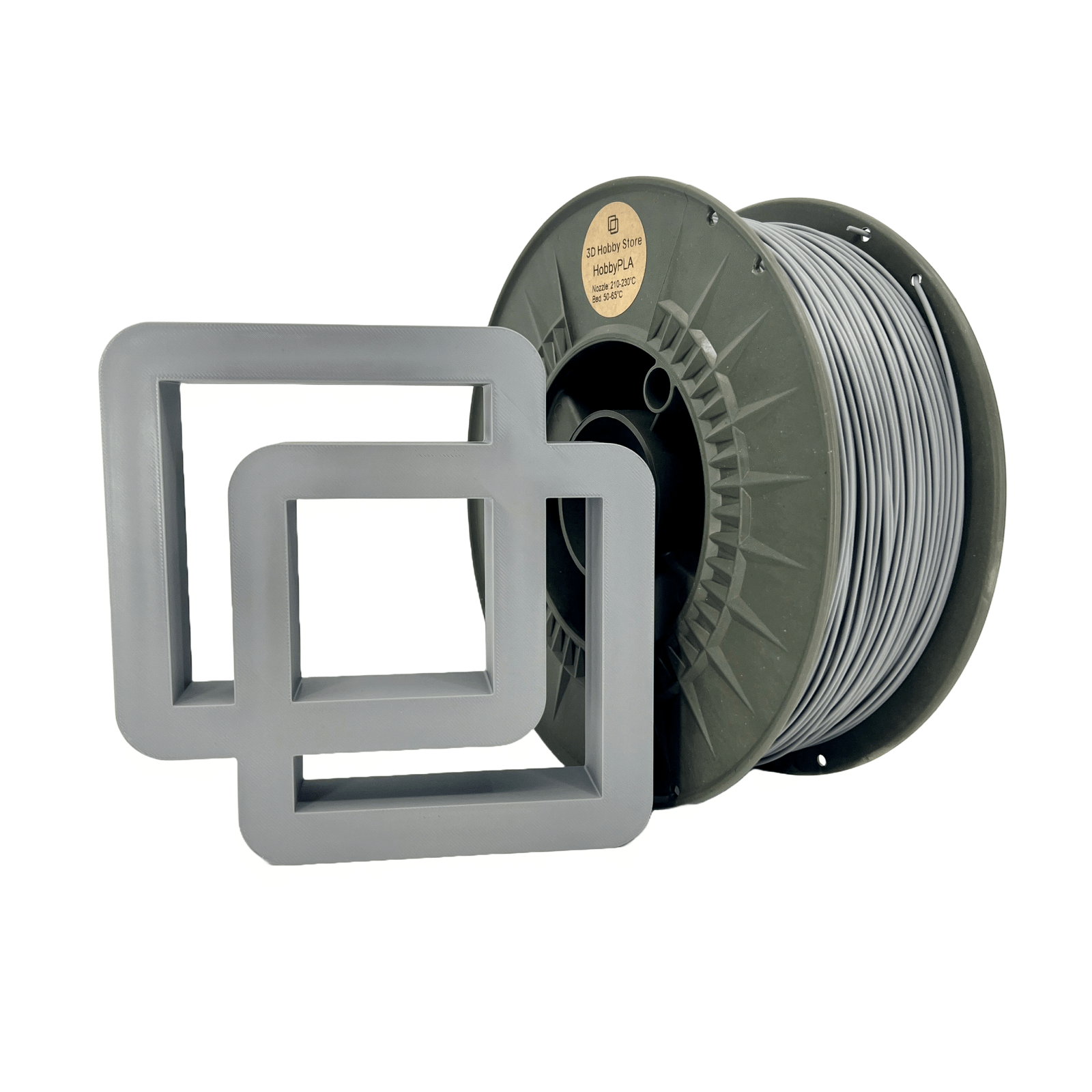
The discussion around PLA vs recycled PLA print quality has become increasingly relevant as sustainability moves from a niche concern to a real decision-making factor for 3D printing users. Makers, engineers, and businesses alike are asking whether switching to recycled PLA means sacrificing surface finish, dimensional accuracy, or reliability. At the same time, advances in material processing have changed what recycled filaments are capable of. To understand what you are really giving up—or not giving up—it’s important to compare material composition, printing behavior, and real-world results rather than relying on outdated assumptions.
Understanding PLA and Recycled PLA at a Material Level
What virgin PLA is made from and why consistency matters
Virgin PLA is produced directly from renewable plant-based sources such as corn starch or sugarcane. The polymer chains are created under tightly controlled industrial conditions, resulting in uniform molecular weight and predictable melt behavior. This consistency is the reason many users associate virgin PLA with reliable extrusion, smooth surfaces, and repeatable results. When discussing virgin PLA vs recycled PLA printing, this consistency is often cited as the primary advantage of virgin material.
Because virgin PLA has not undergone previous thermal cycles, its polymer chains are generally longer and less degraded. This contributes to stable flow through the nozzle, predictable layer bonding, and uniform color dispersion. These qualities directly influence perceived print quality, especially for decorative or dimensionally sensitive parts.
How recycled PLA is produced and refined for 3D printing
Recycled PLA begins its life as previously printed parts, manufacturing scrap, or post-industrial PLA waste. This material is shredded, cleaned, re-melted, and re-extruded into filament. Historically, this process introduced inconsistencies due to contamination or uneven degradation. However, modern recycling techniques now include filtration, controlled blending, and additive stabilization to restore performance.
High-quality recycled PLA is often blended with a percentage of virgin material or chain extenders to improve melt strength. As a result, recycled PLA filament performance today is far more consistent than many users expect, narrowing the gap in PLA vs recycled PLA print quality.
Print Quality Factors That Matter Most in PLA Printing
Surface finish and layer definition
Surface finish is one of the first things users notice when comparing virgin and recycled materials. Virgin PLA typically delivers smoother surfaces with uniform gloss or matte characteristics. Recycled PLA may show slight variations in sheen due to mixed pigment sources or subtle changes in polymer structure.
That said, with proper tuning, recycled PLA can produce layers that are visually comparable to virgin PLA. In many cases, layer definition depends more on nozzle quality, cooling efficiency, and print speed than on whether the material is recycled. When evaluating virgin PLA vs recycled PLA printing, surface finish differences are often minimal in real-world applications.
Dimensional accuracy and tolerances
Dimensional accuracy is closely tied to consistent extrusion and predictable cooling behavior. Virgin PLA has long been favored for tight tolerances because of its stable shrinkage characteristics. Recycled PLA can exhibit slightly higher variability if the filament diameter is not tightly controlled.
However, reputable recycled filament manufacturers maintain strict diameter tolerances, allowing recycled PLA to perform well even in precision prints. In controlled conditions, PLA vs recycled PLA print quality in terms of dimensional accuracy can be nearly identical, especially for parts that are not mechanically critical.
Color consistency and visual appearance
Color consistency is one area where recycled PLA may differ more noticeably. Since recycled material often combines multiple color sources, the final filament color may be less uniform or more muted. For functional parts, this is rarely an issue. For aesthetic prints, virgin PLA still has an edge in delivering vibrant, predictable colors.
Still, many users intentionally choose recycled PLA for its unique, slightly speckled or matte appearance. In this context, recycled PLA filament performance offers a different visual character rather than an inferior one.
Recycled PLA Print Quality vs Virgin PLA in Real-World Use
Layer adhesion and interlayer bonding
Layer adhesion depends on proper melting and diffusion between layers. Virgin PLA generally bonds well due to its stable melt flow. Recycled PLA may require slightly higher nozzle temperatures to achieve optimal bonding, especially if the polymer chains are shorter.
When correctly tuned, recycled PLA exhibits strong interlayer adhesion suitable for most non-load-bearing and moderately functional parts. In practical terms, virgin PLA vs recycled PLA printing shows minimal differences in everyday use.
Stringing, oozing, and print artifacts
Stringing and oozing are influenced by viscosity and moisture content. Recycled PLA can be more sensitive to moisture due to repeated thermal exposure, making proper drying essential. Once dried, recycled PLA often prints as cleanly as virgin material.
Modern formulations have significantly improved recycled PLA filament performance, reducing stringing and inconsistent extrusion. Users who adjust retraction settings slightly may find no noticeable downgrade in print quality.
Warping, curling, and bed adhesion behavior
PLA is already known for its low warping tendencies, and recycled PLA largely retains this advantage. Bed adhesion behavior is generally comparable, especially when using common build surfaces like PEI or textured plates.
In side-by-side comparisons, PLA vs recycled PLA print quality in terms of warping is nearly indistinguishable for standard print geometries.
Strength, Durability, and Functional Performance Differences
Tensile strength and impact resistance
Virgin PLA typically exhibits slightly higher tensile strength due to longer polymer chains. Recycled PLA may show a modest reduction, but for most consumer and prototyping applications, this difference is negligible.
For brackets, enclosures, and general-purpose components, recycled PLA filament performance is more than sufficient. Only highly stressed parts may benefit from virgin PLA’s marginal strength advantage.
Brittleness concerns and long-term part stability
PLA is inherently brittle, and recycling can increase brittleness if not properly managed. High-quality recycled PLA mitigates this through blending and additives. In controlled conditions, long-term stability remains acceptable for indoor applications.
In the broader comparison of virgin PLA vs recycled PLA printing, brittleness is more influenced by print orientation and cooling than by material origin.
How Printer Settings Influence Recycled PLA Results
Nozzle temperature tuning for recycled PLA
Recycled PLA often benefits from slightly higher nozzle temperatures, typically 5–10°C above standard PLA settings. This improves flow consistency and layer bonding.
Proper temperature tuning plays a major role in closing the gap in PLA vs recycled PLA print quality.
Cooling, speed, and retraction adjustments
Cooling settings may need small adjustments to balance layer adhesion and surface finish. Slower print speeds can help compensate for any viscosity variation in recycled filament.
With these adjustments, recycled PLA filament performance becomes highly reliable across a wide range of printers.
Nozzle wear considerations and filament flow
Recycled PLA may contain trace fillers or pigments that marginally increase nozzle wear. Using hardened nozzles for long-term use is a practical solution and does not detract from print quality.
When Recycled PLA Matches or Exceeds Virgin PLA
Modern recycling and quality-control improvements
Advanced recycling processes have dramatically improved consistency. Many recycled PLA products now rival entry-level virgin filaments in printability.
In some cases, recycled PLA outperforms low-quality virgin PLA, challenging assumptions about virgin PLA vs recycled PLA printing.
High-tolerance recycled PLA vs low-grade virgin PLA
Not all virgin PLA is created equal. Poorly manufactured virgin filaments can produce worse results than well-controlled recycled options. This reality reshapes how we evaluate PLA vs recycled PLA print quality.
Sustainability vs Print Quality: The Real Trade-Off
Environmental impact of recycled PLA
Recycled PLA significantly reduces plastic waste and lowers carbon footprint. For users prioritizing sustainability, the minor trade-offs in print quality are often acceptable or even irrelevant.
Cost efficiency and waste reduction benefits
Recycled PLA is often more affordable, making it attractive for large-scale printing or prototyping. When recycled PLA filament performance meets project requirements, cost savings become an additional benefit.
Best Use Cases for Virgin PLA vs Recycled PLA
When virgin PLA is the safer choice
Virgin PLA remains ideal for high-precision models, showcase prints, and applications requiring exact color matching. In these scenarios, virgin PLA vs recycled PLA printing still favors virgin material.
When recycled PLA is more than sufficient
For functional parts, prototyping, educational use, and eco-conscious projects, recycled PLA performs exceptionally well. The difference in PLA vs recycled PLA print quality is often negligible.
Common Myths About Recycled PLA Print Quality
“Recycled PLA is always weaker”
This myth persists despite modern evidence. While there may be minor differences, recycled PLA filament performance is strong enough for most applications.
“Recycled PLA can’t produce clean surface finishes”
With proper settings and quality filament, recycled PLA can achieve smooth, professional-looking surfaces.
Final Verdict: How Much Print Quality Do You Actually Give Up?
When comparing PLA vs recycled PLA print quality, the answer is surprisingly simple: far less than most people expect. Modern recycled PLA has closed the performance gap to the point where differences are subtle and often irrelevant for everyday printing. With minor adjustments and proper filament selection, virgin PLA vs recycled PLA printing becomes less about quality loss and more about informed choice.
For users willing to tune their settings and prioritize sustainability, recycled PLA offers strong recycled PLA filament performance without meaningful sacrifices. In many real-world scenarios, you are not giving up print quality at all—you are simply choosing a more responsible material option